Rethinking Retirement Income by Building Resilient Portfolios
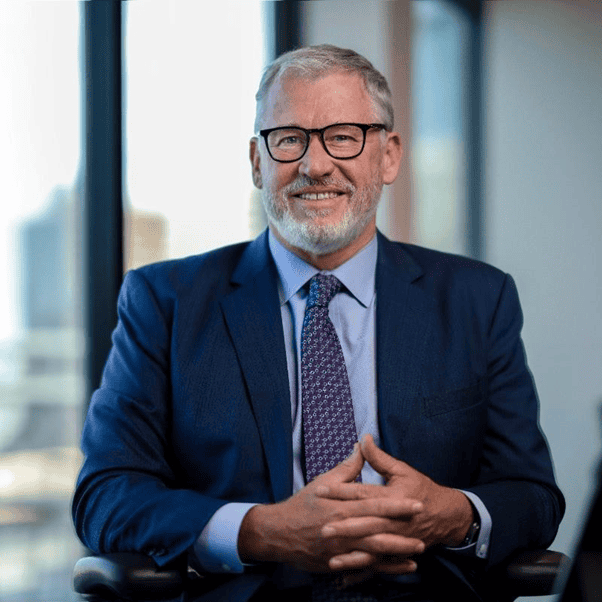
An Interview with Bentham CIO Richard Quin
Liquidity, sequencing risk and inflation all present unique problems for retirees. In this Q&A, Bentham Asset Management Chief Investment Officer Richard Quin delves into the many ways fixed income can help alleviate some of these issues.
Question 1: Why is liquidity such an important issue for retirees?
Richard: When you reach retirement, the game changes. Wealth is no longer something you admire on paper. It’s something you use carefully and repeatedly, so you need access to liquidity to live.
Retirement spending can also be uncertain. In the early stages of retirement, people sometimes spend more than in the later stages. So having access to liquidity for those big events – whether that be a big trip, a gift, or renovations – is important. Liquidity also provides control and peace of mind.
You should always have some growth assets, but there is a good reason to hold fixed interest assets that trade in liquid markets, helping avoid illiquidity concerns around access to capital.
Investors in publicly listed fixed interest can always sell their capital at fair value and are rarely locked in or gated, which can be an issue in some private capital investments funds.
Liquidity is the bridge between paper wealth and real life. Younger investors can ignore volatility because they don’t need the cash. Retirees don’t have that luxury and don’t want to be selling assets at distressed prices when they need capital.
Question 2: How does fixed income help manage sequencing risk in retirement?
Richard: In layman’s terms, sequencing risk is the risk of destroying your lifestyle by drawing down too much in the early stages of retirement and not being able to compensate for poor investment performance later.
It is unfortunate and another bridge that you have to cross on the way to retirement. It makes preserving capital into retirement even more important. For example, if you had a very active growth portfolio but had to sell it to meet your income needs at the worst possible time, it could have a severe impact on the rest of your retirement.
Sequencing risk can be a quiet assassin of a retirement plan, but we believe fixed income can soften the blow. You should really have a lot more in fixed income as you approach retirement because you no longer have the ability to generate income through time and compounding. Fixed interest is generally less volatile than equities and provides income while you wait.
Question 3: How should retirees think about inflation when building an income portfolio?
Richard: Inflation is really dramatic. It eats away at the portfolio. It doesn’t announce itself with crashes or headlines; it simply shows up every year, quietly taking away your capital.
To stop that slow erosion of capital, it’s important to invest in fixed income rather than cash. Because of interest rates, you are paid an income above the inflation rate, which is the objective of building a fixed income portfolio.
Retirement portfolios must be built to protect real earning power. That is why you may hold some floating-rate credit as well as fixed-rate assets.
There is another risk to investing in cash when it comes to inflation. If inflation were to fall dramatically, and you invest only in cash, you don’t get the benefit. You don’t keep your current income level. But if you invest in fixed income, you protect your income level.
You must be very aware of cash eroding your real purchasing power in retirement, and flexibility in this inflationary world is a good thing. You don’t need to beat inflation with bravado. You simply need to be flexible and generate enough income and yield to protect yourself in retirement.
Question 4: Why is diversification within fixed income just as important as diversification across asset classes?
Richard: Many people think of fixed income as just one asset, like a government bond. But that’s far from the truth. It is by far the biggest market in the world. It is what allows governments, utilities, banks and companies to fund.
Firstly, when investing in credit, you must be three to four times as diversified as equities. Fixed income doesn’t offer the same high-kicking returns that can balance a portfolio the way stocks do in an equity portfolio.
Equally, you want different types of fixed income because you have different objectives. Having multiple types of fixed income allows an investor to create a broader opportunity set and a more resilient income portfolio, which is especially important in retirement.
You don’t want to take too little risk, but you also don’t want to take too much risk. For example, you wouldn’t build a portfolio from a single stock, and you shouldn’t build one from a single sector within fixed interest. It’s important not to be fooled by this idea of one asset giving you a yield, because that one asset could end up carrying very high risk.
Question 5: If a retiree is holding a large amount of cash today, what’s the biggest opportunity cost they face?
Richard: It always feels comfortable having cash available, but it doesn’t protect your capital and it doesn’t grow your capital.
If, God forbid, we go into a recession, central banks will lower the cash rate dramatically, which will reduce your income if you’re living off that income in retirement. And that’s a disaster. We’ve seen it before. It’s what happened in 2020 when some unhappy pensioners realised their deposits were not giving them a great return.
Deposits are not as good an investment as they used to be. The government only guarantees up to $250,000 if an ADI fails, and the terms on deposits can be onerous if you want to liquidate before the end of the term. Cash can also quietly lose real value.
In comparison, being able to lock in that inflation benefit with fixed interest can be very beneficial. If interest rates were cut dramatically, you would still be receiving that 6 per cent income rate. But you would also likely see an increase in capital value, and you can sell some of that capital to live.
The bottom line is that the opportunity cost of holding too much cash is missing out on market rallies and a sustainable income engine.
Question 6: What does the return of higher interest rates mean for retirement portfolios over the next decade?
Richard: For retirees, it’s not merely a change in yield; it’s a structural reset in how portfolios can be rebuilt, funded and sustained. Fixed income has reclaimed its rightful place in retirement portfolios because it can now produce a real income.
A stronger income floor allows you to change behaviour. Maybe you can take some other risks in your portfolio because you have the balance of a stronger income base. It reduces sequencing risk, improves sustainability and should give retirees confidence.
It also provides flexibility. With higher rates, you can choose whether you want to have a higher long-term rate or a shorter cash rate. If you believe interest rates are going up, you may want to stay in assets where the base rate is tied to the cash rate.
Higher interest rates are no longer a headwind for retirees. They are much more of a tailwind. And fixed income is no longer a drag on returns. I think it will become a cornerstone of retirement portfolios.
Question 7: What role can Bentham funds play in generating retirement income?
Richard: I have been doing this for a long time and I’ve learnt that retirement investing isn’t about chasing the highest yield on offer, it’s about building something that works quietly and reliably through all sorts of markets. That’s where global and defensive multi‑sector income funds really come into their own. They give retirees access to a broad opportunity set across fixed income while allowing portfolios to adjust as conditions change.
We have experience managing fixed income through many different economic cycles. Bentham’s High Yield Fund has been running for more than two decades and was one of the first of its kind in Australia. Both the Global Syndicated Loan Fund and the Global Income Fund have also been operating for over 20 years. This means that these strategies have been managed through multiple credit cycles, recessions, rate hikes and rate cuts – not just the easy years. History matters because the hard years are where the real lessons are learned, and not every strategy is still around to tell those stories.
Within a global or defensive income framework, high yield and syndicated loans aren’t the whole story; they are supporting players. But they do recover more quickly than equity markets. High yield can lift the income profile when investors are properly compensated for risk, while syndicated loans bring a floating‑rate element that can help in inflationary or rising‑rate environments. In a multi‑sector fund like the Bentham Global Income Fund, those exposures are actively managed and kept in balance rather than allowed to dominate.
For retirees, that balance and flexibility are crucial. There will be times when you want to be more defensive and times when opportunities justify leaning into higher‑yielding sectors. A well‑run global income fund gives you the ability to do that within a single structure.
Retirees should be able to relax and not worry about making big asset allocation decisions that (sometimes) may have negative results. In my experience, that’s what leads to a more resilient and sustainable income outcome over the long run.
Important Information
Unless otherwise specified, any information contained in this article is current as at the date of this publication and is provided by Fidante Partners Services Limited ABN 44 119 605 373, AFSL 320505 (Fidante Partners), the responsible entity and issuer of interests in the Bentham Wholesale Syndicated Loan Fund (Fund). Bentham Asset Management Pty Ltd ABN 92 140 833 674 AFSL 356199 (Bentham) is the investment manager of the Fund. The information is intended solely for holders of an Australian Financial Services Licence or other wholesale clients as defined in the Corporations Act 2001 (Cth). It is intended to be general information only and not financial product advice and has been prepared without taking into account any person’s objectives, financial situation or needs. Each person should, therefore, consider its appropriateness having regard to these matters and the information in the product disclosure statement (PDS)and any additional information brochure (AIB) for the Fund before deciding whether to acquire or continue to hold an interest in the Fund. If you acquire or hold an interest in the Fund, we will receive the fees and other benefits, which are disclosed in the PDS or any AIB. Neither Fidante Partners nor a Fidante Partners related company and our respective employees receive any specific remuneration for any advice provided to you. However, financial advisers (including some Fidante Partners related companies) may receive fees or commissions if they provide advice to you or arrange for you to invest in the Fund. Bentham, some or all Fidante Partners related companies and directors of those companies may benefit from fees, commissions and other benefits received by another group company. The PDS and any AIB can be obtained from your financial adviser, Fidante Partners Investor Services tem on 13 51 53, or Fidante Partner’s website www.fidante.com.au.